 /week free
Short answer: yes, you can sell AI-generated art, and people are doing it every day — selling prints on Etsy, contributing to Adobe Stock, fulfilling commissioned book covers, listing prompt packs on PromptBase. The longer answer covers three things you should understand before you list your first piece: what your AI platform's terms allow, what the marketplace you're selling on allows, and what actually sells (because "you can sell" and "you can make money" are very different questions).
This guide covers all three, plus the nine concrete paths for monetizing AI generators in 2026.
What the major AI platforms allow you to sell
Most modern AI generators grant commercial use as part of their terms of service. The exact rights vary by platform and plan, so always read the fine print, but the general 2026 landscape:
- OpenAI (DALL·E, image and video models) — Commercial use granted on paid plans.
- Midjourney — Commercial use granted on paid plans; free/trial output is non-commercial only.
- Stable Diffusion / Flux — Permissive open-source licenses; commercial use is generally fine but check each model card.
- Adobe Firefly — Commercial use granted, with the additional pitch that the model was trained on licensed content (lower training-data risk).
- Generor — Commercial use granted on all plans, across images, music, voice, and video produced through the platform.
The contract clauses to look for in any tool: ownership/license assignment, commercial use rights, indemnification (some enterprise tiers cover you against training-data lawsuits), training opt-out, and disclosure requirements.
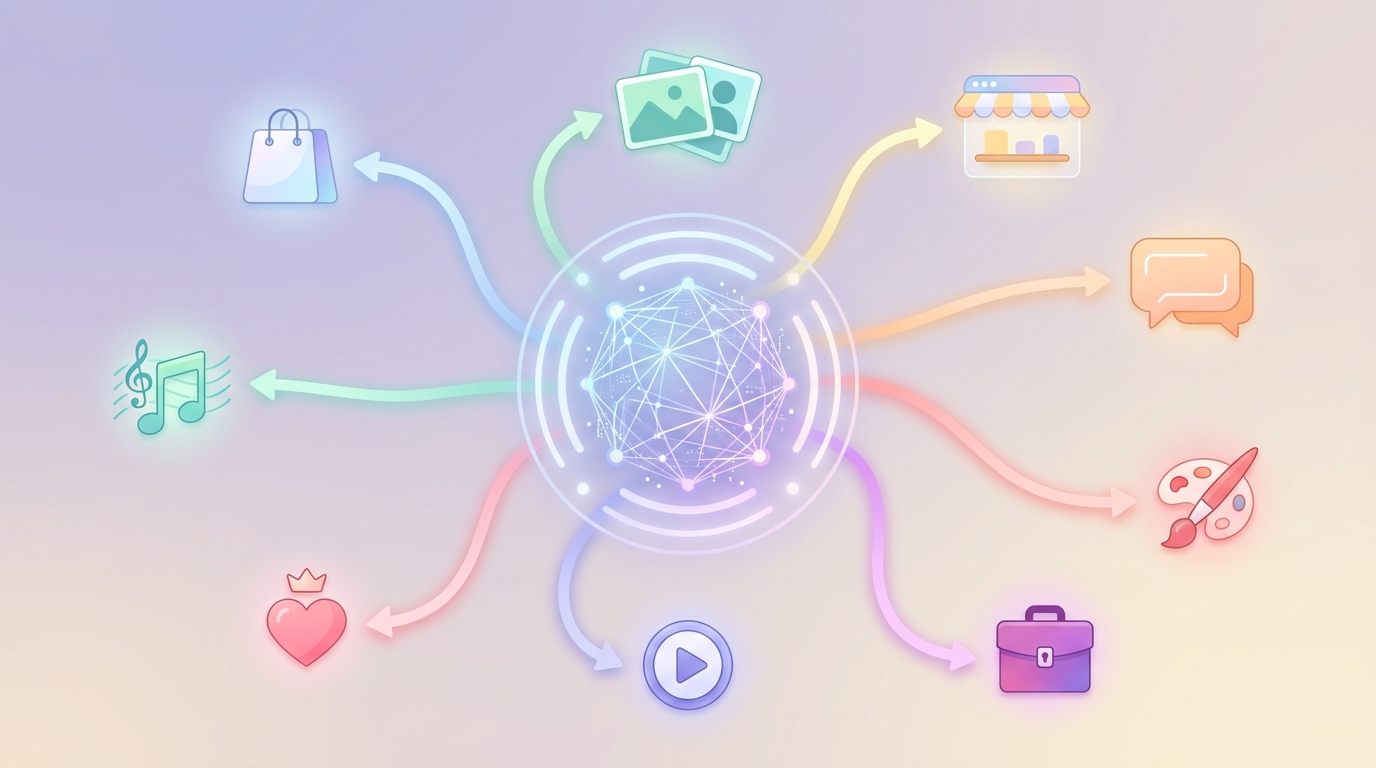
The 9 ways people actually earn money with AI generators
1. Print-on-demand (POD)
Etsy, Redbubble, Society6, Printful, Teespring. You upload a design, the platform prints it on demand on physical products (posters, T-shirts, mugs, phone cases, tote bags), and you take a cut. The easiest entry point — no inventory, no shipping, no upfront cost. Etsy is the volume leader for AI art prints in 2026 and explicitly allows AI listings (with disclosure required).
2. Stock photography and illustration
Adobe Stock formally accepts AI-generated submissions and pays per download. Shutterstock has a contributor program for AI work. Pond5 accepts it. Getty Images and iStock still ban AI-generated content. Stock is the long-tail revenue play — low per-asset payouts that compound from a sufficiently large library.
3. Direct sales on your own platform
Gumroad, Ko-fi, Shopify, your own site. Sell digital downloads (high-res files, prompt packs, presets, asset bundles) or fulfill physical products yourself. You keep more revenue but you have to drive your own traffic — usually via social, SEO, or an existing audience.
4. Selling prompts and models
PromptBase is the established marketplace. Civitai hosts community-shared prompts, LoRAs, and full model checkpoints with optional paid tiers. You sell refined prompts or fine-tuned models to people who don't want to engineer their own. Niche but real income for prolific creators with a recognizable style.
5. Commissioned work
Pet portraits, custom couple portraits, deceased-relative photo restorations, book covers, podcast art, logos, brand kits. Marketplaces like Fiverr and Upwork have full AI-art categories now. The premium niches in 2026: custom AI children's books (parents commissioning illustrated books starring their kids), AI memorial portraits, and stylized AI pet portraits.
6. Service bundles for small businesses
Bundle AI-generated assets into a packaged service: logo + brand kit + 30 days of social media graphics for a flat fee. This positions you as a designer who happens to use AI, not as a "prompt-typer." Higher margins, repeat clients, and direct relationships beat the marketplace race-to-the-bottom.
7. Content creation around AI art
YouTube, TikTok, Instagram, blogs. Build an audience around AI art (tutorials, walkthroughs, model comparisons, "X with AI" challenges) and monetize via ads, sponsorships, affiliate links, and your own product line. The audience-first path takes the longest, but compounds the longest too.
8. Memberships and Patreon
Subscribers pay monthly for early access, exclusive content, custom requests, or behind-the-scenes prompt walkthroughs. Works best once you've established a recognizable style or niche — Patreon rewards specificity.
9. Beyond images — music, voice, video, and books
Most monetization advice focuses on images, but AI generators now produce sellable music (Suno, Mureka, ElevenLabs Music), voiceovers (ElevenLabs, Cartesia), short-form video (Sora, Runway, Wan), and full children's books and ebooks. Stock music libraries, audiobook narration platforms, YouTube voiceover services, and Amazon KDP all accept AI-assisted work with disclosure. This is the most underexploited corner of the market in 2026.
Where AI art actually sells: marketplace comparison
Major marketplaces and their stance on AI-generated work in 2026
| Marketplace | AI work allowed? | Disclosure required? | Fees / cut | Best for |
|---|---|---|---|---|
| Etsy | Yes | Yes, in listing | 6.5% + $0.20 listing | Prints, posters, digital downloads |
| Redbubble | Yes | Yes | Set your own margin | T-shirts, stickers, prints |
| Society6 | Yes | Recommended | Set your own margin | Wall art, home goods |
| Adobe Stock | Yes (formal program) | Required (AI flag) | 33% royalty | Stock illustrations |
| Shutterstock | Yes (program) | Required | Variable royalty | Stock contributor income |
| Getty / iStock | No | N/A | N/A | Avoid for AI work |
| Gumroad | Yes | Recommended | 10% + processing | Digital downloads, prompt packs |
| Fiverr / Upwork | Yes | Recommended | 20% / 5–20% | Commissioned work |
| PromptBase | Yes (the point) | N/A | 20% commission | Selling prompts |
| Amazon KDP | Yes | Required | Royalty model | Ebooks, children's books |
What sells (and what doesn't)
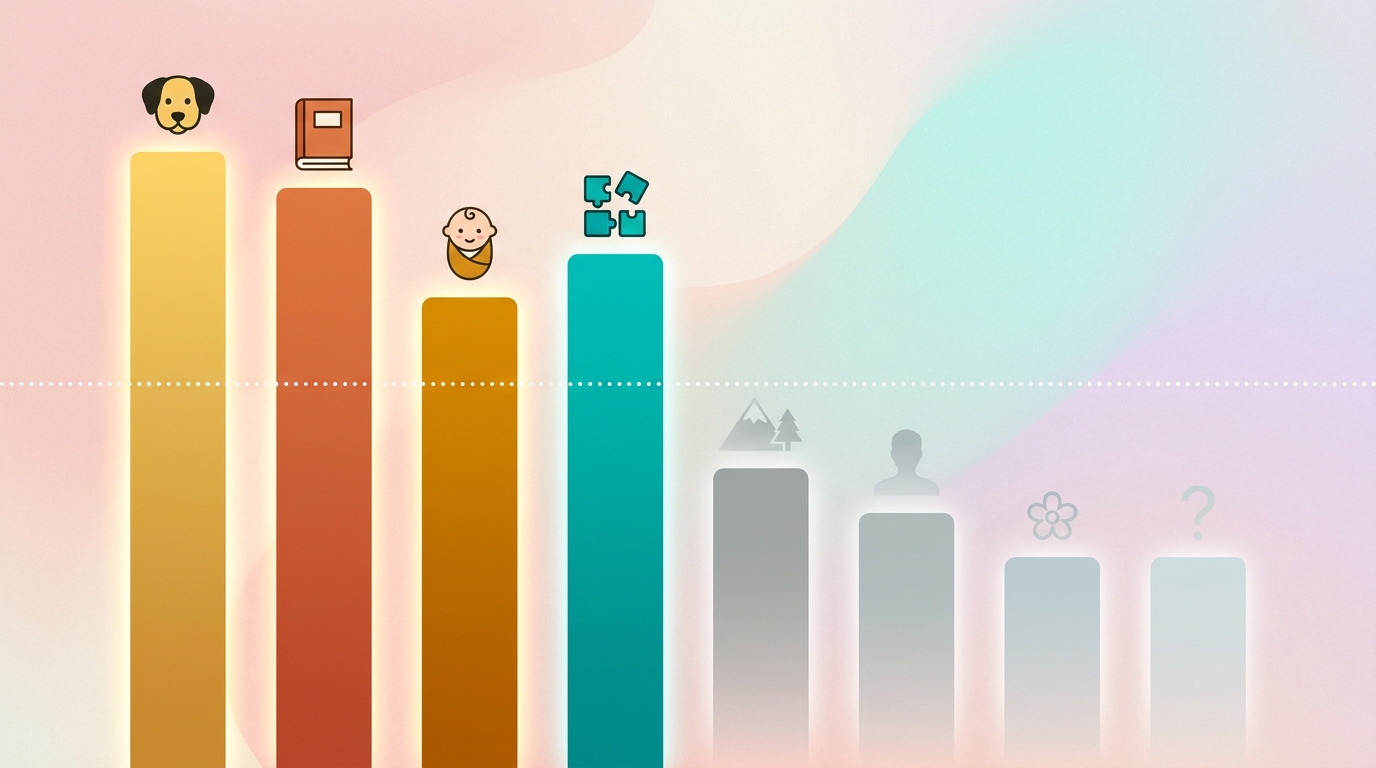
After three years of AI art on the open market, the patterns are clear.
What sells well
- Niche over generic. "Vintage botanical illustrations of medicinal herbs in a Victorian style" outsells a generic landscape every time. The more specific the niche, the lower the competition.
- Series and consistency. Buyers respond to coherent collections (12-print zodiac series, full alphabet sets, themed wall art) more than one-offs.
- Personalization. Custom commissions — pet portraits, couple portraits, family-tree illustrations — command premium prices because the AI element is invisible to the buyer; they're buying a custom artwork.
- Functional art. Wall art for specific spaces (nursery prints, kitchen quotes, gym motivation), book covers for specific genres (cozy mystery, romance, sci-fi), Etsy templates that solve a problem.
- Asset packs. Bundles of textures, icons, social media templates — useful, reusable, and immediately monetizable for the buyer.
What struggles
- Generic "AI art" with no clear use case.
- Highly stylized portraits competing with the millions of free ones already online.
- Hyper-realistic landscapes — cheap to produce now, low perceived value.
- Anything that screams "AI-generated" without curatorial framing or a clear buyer.
How to price AI work
A reasonable starting framework:
- Digital downloads / prints: $5–$25 for single prints, $25–$75 for collections.
- Custom commissions: $30–$150 per piece, more for fast turnaround or revisions.
- Stock platforms: trust the platform's pricing — you're optimizing for volume, not unit price.
- Prompt packs: $5–$30, depending on quality and exclusivity.
- Service bundles (logo + brand kit + social pack): $200–$800.
A rule of thumb: don't undercut hand-illustrated work to "compete on AI." Position on niche, taste, and curatorial judgment. The race-to-the-bottom corner of AI art is brutal and unprofitable.
Disclosure: where it's required and where it's optional
Disclosure rules in 2026 are platform-specific and getting tighter:
- EU AI Act mandates labeling of AI-generated media shown to EU users.
- Etsy, Adobe Stock, Shutterstock, Amazon KDP all require AI disclosure in listings.
- Most freelance platforms (Fiverr, Upwork) recommend disclosure and ban active deception.
- Your own site has no external rules — but hiding AI involvement risks reputation, refunds, and word-of-mouth damage when discovered.
The pragmatic take: disclose by default. It's a smaller hit than people fear — informed buyers are usually fine with AI work — and it eliminates the worst-case scenario where deception unravels your account or store.
Three common mistakes that kill AI art businesses
- Listing 500 generic images and hoping for volume. Marketplaces algorithmically favor focused, well-tagged, niche listings. Quality and specificity beat quantity every time.
- No watermark or low-res preview. Buyers can right-click any preview image. Only sell access to the high-res file; treat your listing image like a movie trailer, not the movie.
- Skipping disclosure to avoid scaring buyers. This backfires when discovered. Account bans, refund waves, and bad reviews cost more than honest disclosure ever did.
Your first $100: a concrete starter plan
A reasonable two-week sprint:
- Pick one specific niche. Not "wall art" — something like "botanical kitchen prints in soft watercolor."
- Generate a coherent set of 12 pieces in that niche, then cull to your strongest 6–8.
- Open an Etsy or Redbubble store. Fill out branding, descriptions, and tags. Disclose AI use clearly.
- List the set as individual pieces and as a discounted bundle.
- Run a soft launch. Share on Pinterest, TikTok, and relevant subreddits. Pin a few pieces as inspirational content, not pure sales pitches.
- Iterate. Generate a second batch in the variants buyers actually saved or favorited.
Your first $100 typically comes from one person who liked one piece and bought the bundle. Optimize for that interaction, not for top-of-funnel impressions.
The bottom line
Yes, you can sell AI-generated art — and plenty of people are earning real income from it. The path that works is the same one that's worked for human-made art for decades: pick a niche, produce a coherent body of work, get distribution, disclose honestly. AI just changes how fast you can produce, not what makes a sale.
For the legal layer — copyright, terms of service, training-data risk — see Who Owns AI-Generated Content? (2026 Copyright Guide). For the technical side of getting your face or a specific style into AI tools, see How to Put Yourself in an AI Image Generator.